
Searching Haywood County Criminal Dockets
The main online route is the Haywood TNCRTInfo landing page. It serves the participating Haywood County Circuit Court and General Sessions offices. Not every court or document is included, though. Before you search, gather a full party name, the filing year, a case number, and the likely court, because a narrow query is far easier to verify than a broad name match.
- Open the TNCRTInfo case search.
- Select Haywood Circuit or General Sessions.
- Choose Criminal and clear Civil.
- Enter the full name, year, or final numeric case segment.
- Confirm the likely row with the Circuit Clerk.
When the portal comes up empty, call 731-772-1112. You can also visit the Circuit Clerk at 100 South Dupree Avenue in Brownsville. A public terminal sits in the lobby. You can also request records under the Tennessee Public Records Act. Certified copies always come from the clerk.
Keep identifiers in their original form until you shorten them for the search field. A warrant number, an indictment number, a citation number, and a court case number can all point to related events. Yet none of them are interchangeable. The office you pick matters too. Widening a Circuit search will not surface a General Sessions record. A Brownsville or Stanton ordinance case may sit with a city custodian instead. Pick one likely route. Save whatever reference it yields, and let the Circuit Clerk connect numbers that refuse to line up.
Haywood Criminal Search Fields
TNCRTInfo gives you more than a name box. Its help text recommends a full first and last name. Case Year and Case Number are separate fields. You must select at least one court office before the search runs. For a number like 99GS1-2023-CR-12345, try entering only 12345 in the Case Number field.
| Field | Use | Caution |
|---|---|---|
| Party Name | Full name or case reference | Do not mix both |
| Case Year | Narrow name matches | Not a case identity |
| Case Number | Final numeric segment | Confirm the full number |
| Office | Circuit or General Sessions | Wrong office can hide a match |
The portal terms warn that data may be incomplete or out of date. A blank result does not prove that no record exists.
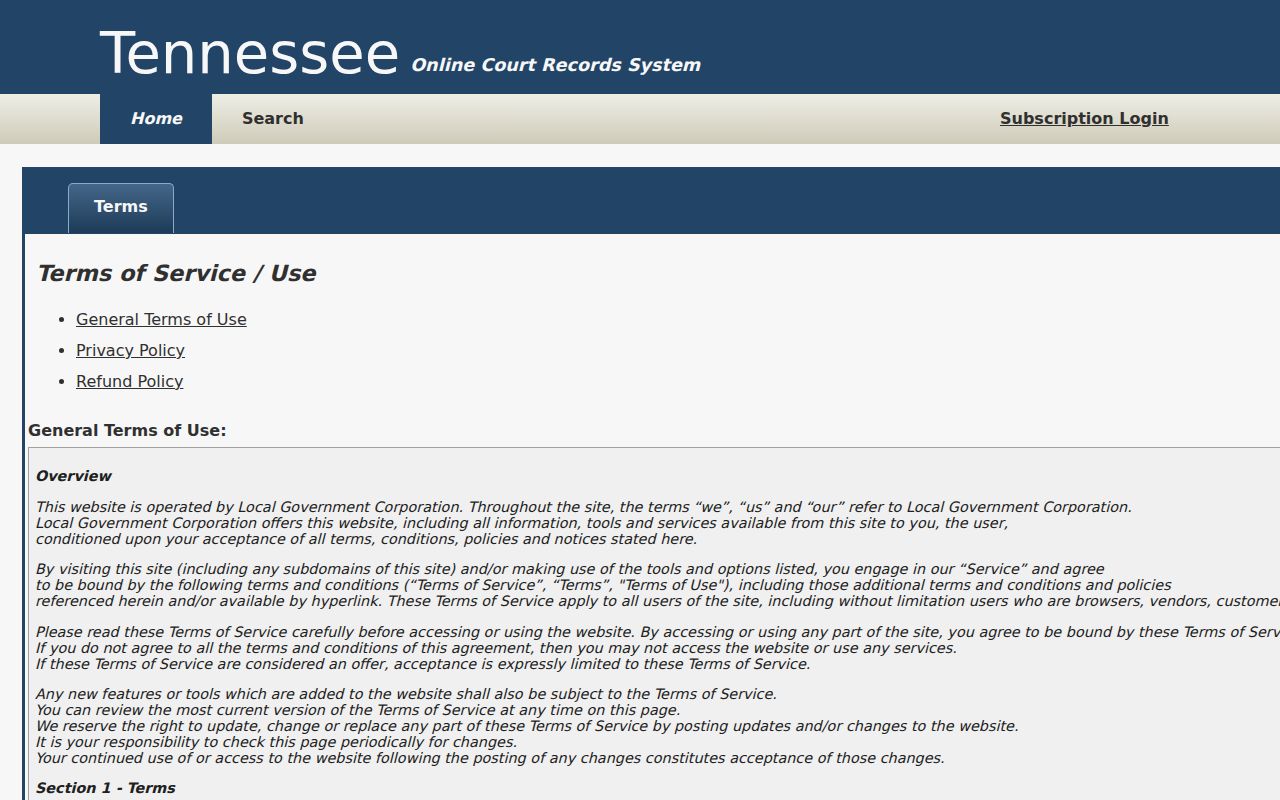
The official terms page documents that limit, which is why clerk verification belongs in every Haywood County criminal docket search.
Inside a Haywood County Criminal Docket
A docket is a dated record of events, not the whole case file. It may point to a warrant, an indictment, a setting, a plea, an order, a sentence, a restitution entry, or an appeal. The charge itself remains an allegation until a disposition establishes the outcome. A linked document may take a separate request.
| Case number | Clerk-assigned identity |
|---|---|
| Charge | Offense as entered, not a finding |
| Setting | Date and event type |
| Plea | Recorded response or agreement |
| Disposition | Dismissal, transfer, conviction, acquittal, or other result |
| Sentence | Custody, probation, restitution, treatment, or review |
If a docket entry is unclear, ask for the minutes, the signed order, or the judgment. A phone confirmation is fine for status, but a certified copy is the formal record.
Haywood General Sessions Docket
Warrants, subpoenas, re-arrests, scire facias process, and traffic citations all land in General Sessions Court. The ones counted here are written by State Troopers or the Sheriff. The criminal docket for that court runs on Tuesdays. Sessions start at 9:00 a.m. and again at 1:30 p.m. Treat those as standing division times for Haywood County. They are not proof that any one case is still set on them.
Whatever date appears on your summons, citation, order, or a later notice is the date that controls. That holds unless the clerk confirms a change. This court can handle early criminal steps before a matter ends, is bound over, or goes to a grand jury for indictment. Bound over simply means the lower court sends the case onward.
The official Haywood records landing posts the docket search entry point for these case records.
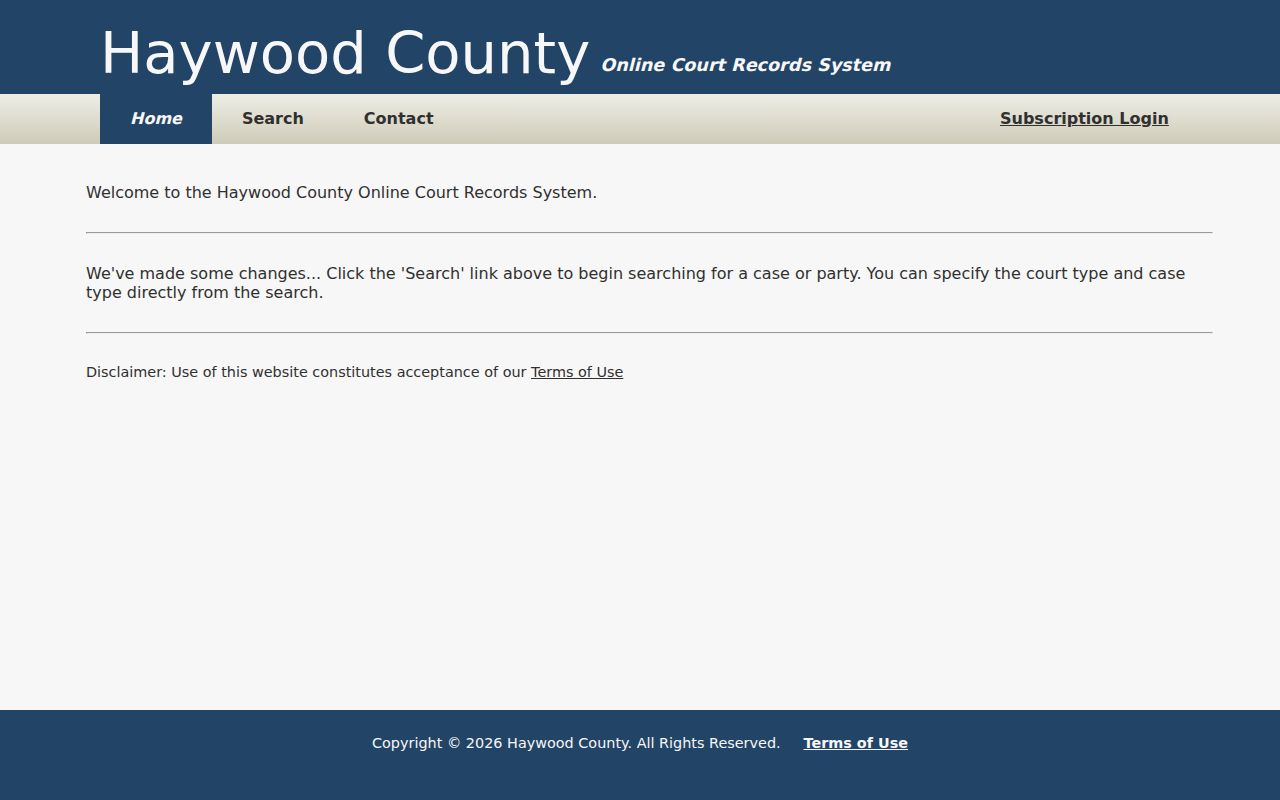
The landing connects searchers to participating offices without replacing the clerk’s file.
How a Criminal Case Moves
The usual path is conditional, not fixed. A case might start with a citation or warrant, pass through General Sessions, and reach Circuit Court after a bind-over or indictment. Some matters end earlier. Others reset, take a diversion or treatment path, or come back for compliance review.
Docket flow: Filing › Arraignment › Pretrial › Plea or Trial › Disposition › Sentencing
- Arraignment
- An appearance when charges and next steps are addressed.
- Nolle prosequi
- A decision not to pursue a charge at that time.
- Disposition
- The outcome or current resolution.
- Reset
- A new date after a prior setting changes.
A later order can change what an earlier docket line means. Read the whole sequence, not one isolated entry.
Haywood Circuit Criminal Records
The Circuit Court carries the heavy criminal load in Haywood County. That load includes misdemeanors and felonies, Grand Jury indictments, trial dockets, post-conviction work, and appeals or transfers. Behind the bench sits the Circuit Clerk. The clerk enters the minutes, files pleadings and exhibits, and keeps the official court records. Unlike some courts, Haywood County's circuit settings do not appear on the county page as one standing weekly time. Call ahead. The office sits at 100 South Dupree Avenue, open weekdays from 8:00 a.m. to 4:30 p.m. Bring a case or indictment number if you have one. A warrant number alone is worth mentioning too, since it can differ from the court case number. Tell the clerk exactly what you want: a docket, minutes, an order, an exhibit, a judgment, or a certified copy.
The clerk also receives and accounts for fines, costs, and restitution. Here is a trap worth knowing. A payment entry in the docket may show only an assessment or receipt. There may be no hint of the full sentencing terms. When the legal basis for an amount matters, ask for the judgment or the relevant order instead. On appeals, be clear whether you need the Haywood County trial docket or the later appellate history. Tennessee's Public Case History portal covers the Court of Criminal Appeals and the Supreme Court, but not the full trial-court file.
Two distinct requests sit inside public records law: inspection and copies. State guidance says inspection generally carries no charge unless another law applies. Copies, certification, postage, or retrieval may cost money. The accessible county page posts no complete criminal-copy schedule. So ask the clerk for the current amount, the accepted payment method, and how delivery works before you order. Staff will tell you the filing route and what record exists. They cannot advise a party what motion to file or how to respond to one.
Courts That Hold Criminal Dockets
Haywood County lists no separate Criminal Court. General Sessions handles the lower-level process, while Circuit holds the trial dockets within its jurisdiction. Juvenile Court shares the same clerk but carries special access limits, and municipal ordinance cases may stay with Brownsville or Stanton.
| Route | Work | Custodian |
|---|---|---|
| General Sessions | Warrants, early settings, traffic | Circuit Clerk |
| Circuit | Indictments, trials, appeals | Circuit Clerk |
| Juvenile | Restricted youth matters | Circuit Clerk |
| Municipal | City ordinance cases | City custodian |
Ask the wrong office and you will often walk away with an empty result. The Haywood County case lookup spells out how name and number searches work in more detail.
Haywood Specialty Criminal Settings
Haywood County's specialty settings run on their own clock. The county publishes a DUI Docket Thursday at 9:00 a.m. Recovery Court meets Tuesday at 1:00 p.m. Recovery Court opened in July 2022 through General Sessions, serving nonviolent misdemeanor participants with substance-use disorder through supervision, treatment, intervention, and rehabilitation. Domestic Violence Court is listed Monday at 9:00 a.m. None of these are separate public portals; they are calendar divisions or programs. A standing time also tells you nothing about who will appear. So confirm any specific setting with the clerk and the latest notice.
Access has limits even where the docket is public. Public access does not authorize release of protected addresses, victim details, or sealed material. The DUI, Recovery, and domestic-violence settings may sit in the same clerk system. Yet they follow different calendar routines, so start with the Haywood County office and a criminal filter, then name the specialty setting shown on your notice. Treatment, medical, juvenile, and protected-party information can stay restricted even when a general docket event is open to anyone. A division label tells you where a matter is heard. It never tells you what details may be disclosed.
Haywood Criminal Filing Counts
The Administrative Office of the Courts counted 652 criminal filing counts and 420 disposition counts for Haywood County in fiscal 2024-2025. These are counts, not unique cases or people. Burglary/Theft, Drugs, government-administration offenses, public-welfare offenses, and assault ranked among the larger filing groups.
Dismissal or nolle prosequi was the most common manner of disposition. Guilty pleas as charged came next, then pleas to lesser charges. Those totals describe workload, nothing more. They say nothing about any single case.
Filing counts and disposition counts measure different events. A criminal matter filed near the end of a fiscal period may be resolved in a later report. A disposition entered in that same period may concern a much older filing. So the gap between the two totals is not a count of unresolved Haywood County cases. It will not tell you how long one case should take. For that, only the case docket, the current setting, and a status the clerk confirms will answer the question.
Read the category totals with the same care. They reflect how the state report grouped filed counts. They do not show what a judge found, and not the legal history of any named person. A charge can be amended, transferred, dismissed, resolved by plea, or decided at trial. The final order and the minutes remain the controlling record. If a portal row and the annual report seem to disagree about an individual matter, rely on the clerk's case file.
Sealed Dockets and Public Access
Court records in Haywood County are generally open to the public, but a law, rule, or court order can close the door. Sealed, expunged, juvenile, medical, minor-related, and victim-protected material may be withheld or redacted. Redaction strips protected details from a public copy rather than sealing the whole file. And remember: absence from an online docket is not proof of expunction.
Key rules:
Tennessee Supreme Court Rule 34 opens public court records unless an exception applies.
Tenn. Code Ann. § 37-1-153 limits access to juvenile files.
TPRA guidance explains inspection and copy requests.
When something seems missing, ask the clerk whether a public docket, a redacted document, or a sealing order is available. The official search source starts a Haywood County query.
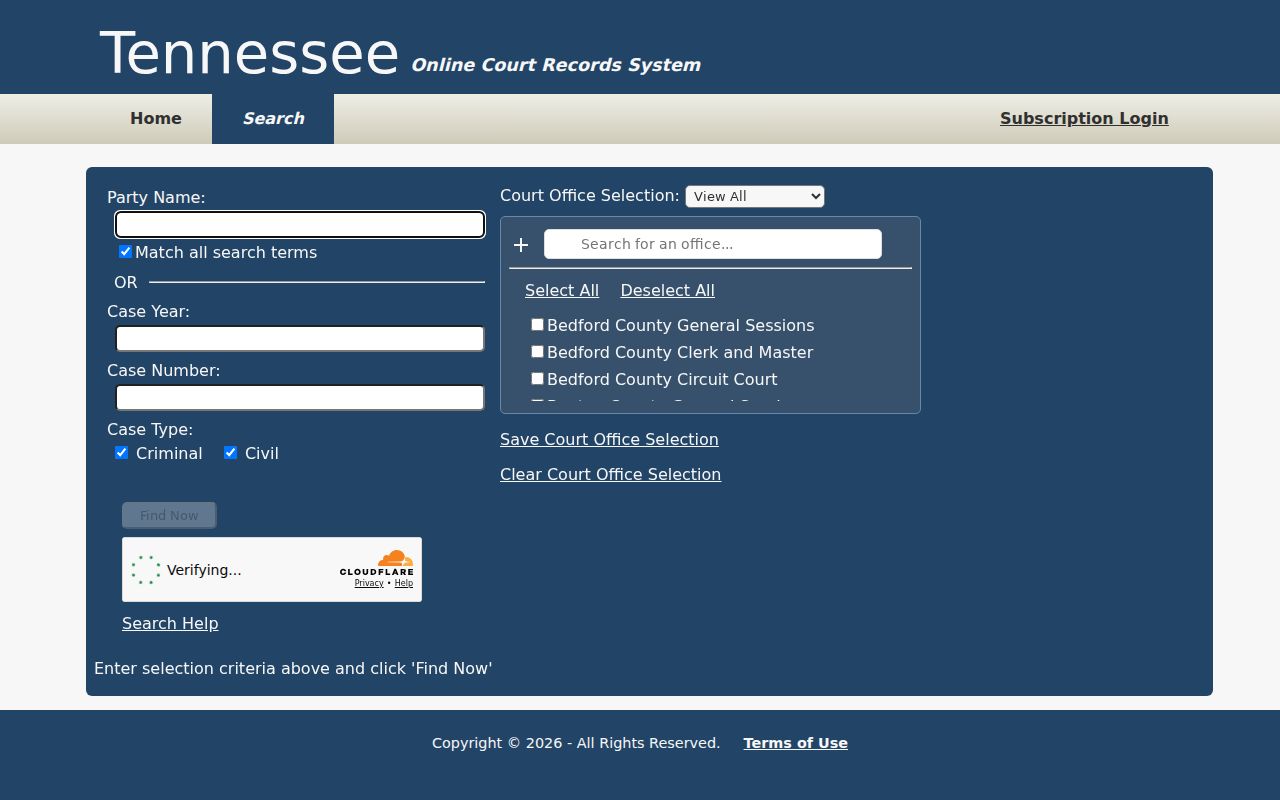
The lookup screen only begins the search; access and certification remain with the clerk. The statewide TNCRTInfo source identifies the service behind it.
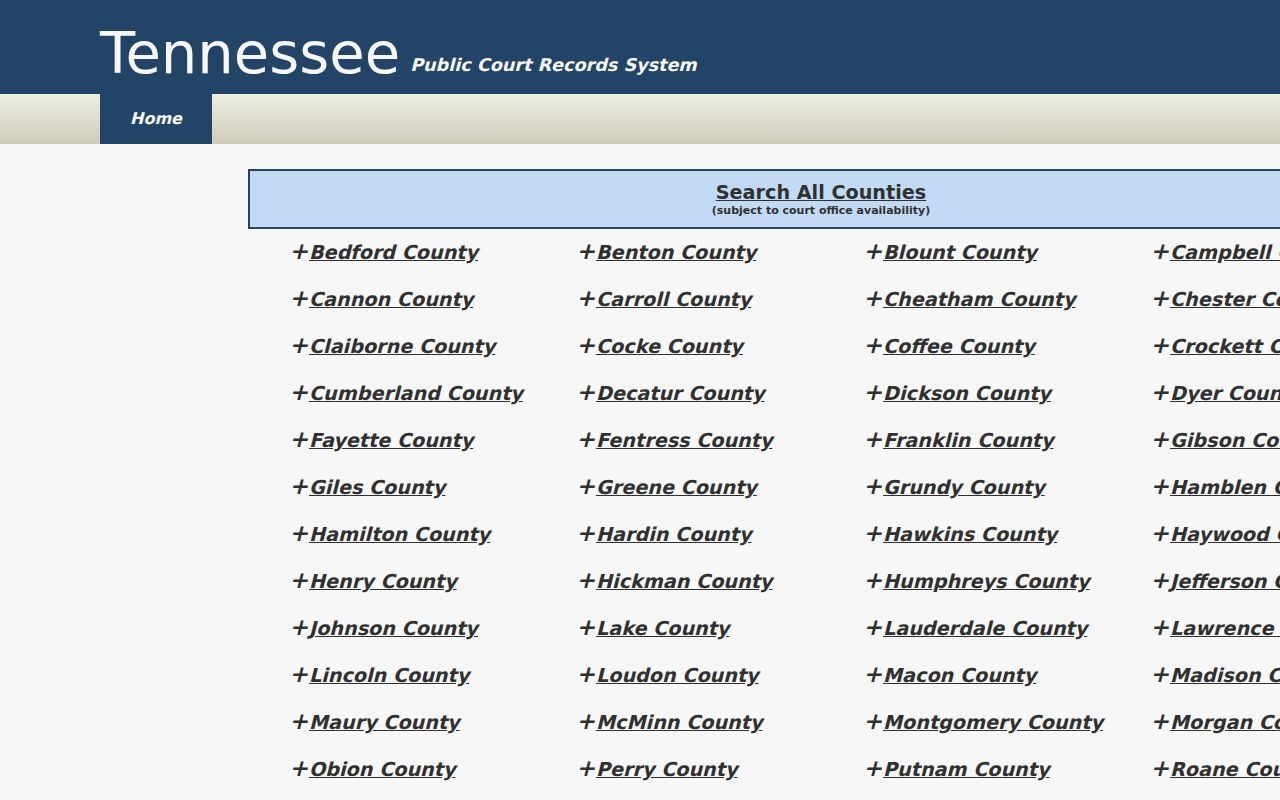
The statewide route helps find the service, but each result still needs verification.