
Searching Haywood County Civil Dockets
Haywood County points searchers to TNCRTInfo for Circuit and General Sessions records. Only records that participate in the system appear. Have a full party name ready. Also bring the case year and any case number you know. Searching civil only? Clear the Criminal box first. One name can surface in several cases. Check the office, year, case style, and number before you treat a row as your match.
- Open the statewide case form.
- Select Haywood County Circuit Court or General Sessions.
- Choose Civil and remove Criminal.
- Enter a full name, year, number, or narrow combination.
- Filter the returned rows, then verify with the owning clerk.
No row appearing does not mean no case exists. Call the Circuit Clerk at 731-772-1112. Or use the public terminal at 100 South Dupree Avenue. For Chancery matters, contact the Clerk & Master at 731-772-0122 instead. Public records can be inspected at the right counter. They can also be requested under the office's written policy. Confirm mail and copy-delivery details before you send any payment.
Haywood Civil Search Fields
The TNCRTInfo search help page recommends full names and explains the separate Case Year and Case Number fields. Got a formatted reference like 99GS1-2023-CV-12345? Try just the final numeric segment, 12345. That shortcut is handy, but it never replaces confirming the complete clerk-assigned number.
| Control | Useful entry | Why it matters |
|---|---|---|
| Party Name | Full first and last name or organization | Partial names create broad matches |
| Case Year | Likely filing year | Separates similar case styles |
| Case Number | Final numeric segment | Must be tied to the right office |
| Office | Circuit or General Sessions | Chancery is a separate route |
The help source shows how the controls work.
The interface allows a narrow search, yet it does not promise every civil document is online.
Inside a Haywood County Civil Docket
A civil docket records the case in sequence. You might see a complaint, answer, motion, service event, hearing, order, judgment, appeal, execution, or garnishment listed there. One caution applies. A docket entry is not the filing itself. When the exact words of a claim, defense, or ruling matter, ask the clerk for the public document or a certified copy.
| Case number | The clerk-assigned identity for the matter |
|---|---|
| Case style | The caption naming plaintiffs, defendants, petitioners, or respondents |
| Filing date | When the clerk entered a pleading or paper |
| Setting | A scheduled motion, hearing, conference, or trial |
| Order | A direction or ruling entered by the judge |
| Disposition | Dismissal, settlement approval, judgment, transfer, or other outcome |
Financial and payment entries can mislead on their own. Read the judgment together with the enforcement filings that follow it. A later order may amend an earlier ruling, and an appeal can shift review to the Tennessee Court of Appeals.
Haywood General Sessions Civil
General Sessions Court hears civil claims under $25,000, according to the county page. Its clerk handles subpoenas, detainer warrants, writs of possession, garnishments, executions, and related process. The standing General Sessions Civil Docket runs Wednesday at 9:00 a.m.
Some terms need unpacking. A detainer action concerns possession of property, often rental property. A writ of possession is the court process that carries out an order for possession. Those words name record types, not the result of every case. The written summons, the later order, and a clerk-confirmed setting control over the weekly schedule. A reset can put the matter on a new date.
General Sessions and Circuit show up as separate office choices. Pick General Sessions for a lower-court claim. Do not assume every civil dispute belongs in Circuit.
Civil Case Types on the Docket
Haywood County splits civil work by jurisdiction and subject. General Sessions handles claims within its monetary limit. Circuit takes lawsuits over $25,000, plus divorces, name changes, condemnations, trial dockets, and appeals from lower courts. Chancery works in equity, meaning it can grant remedies like injunctions when money alone is not adequate.
| Court | Examples | Records office |
|---|---|---|
| General Sessions | Claims under $25,000, detainers, garnishments | Circuit Clerk |
| Circuit | Larger suits, divorce, condemnation, appeals | Circuit Clerk |
| Chancery | Real estate, contracts, injunctions, probate | Clerk & Master |
| County Clerk legacy files | Probate 1826-1982; divorce 1941-1965 | County Clerk |
A party name search cannot rescue you from the wrong office. Identify the subject and date first, then search or call the office that owns that civil record.
Haywood Chancery and Probate
Haywood County Chancery Court handles real-estate disputes and breach of contract. It also hears divorce, adoption, injunctions, name changes, and delinquent property tax matters. Chancery has held exclusive probate jurisdiction in Haywood County since 1982. Estates, wills, conservatorships, and guardianships filed after that point route to the Clerk & Master.
Older records follow another path. The County Clerk holds probate from 1826 through 1982. The same office keeps divorce records from 1941 through 1965. Chancery records reach back to the early 1800s. Some early material was moved to microfilm at Elma Ross Public Library. A modern online search can be accurate. It may still be incomplete for a historic estate, family, land, or equity matter.
When you contact a custodian, give a date range, party names, record type, and any book or page reference. That detail helps staff separate a current electronic docket from a legacy volume.
Civil Docket Settings and Hearings
A setting is a scheduled event, not necessarily the trial. Civil cases get set for motions, status conferences, settlement reviews, evidentiary hearings, or trials. Check the docket entry against the latest notice or order. Do the two conflict? Call the clerk who owns the case before relying on either date.
- Motion
- A request asking the judge for a ruling.
- Continuance
- A court-approved move to a later date.
- Reset
- A new setting assigned after the earlier one changes.
- Judgment
- The court’s enforceable decision.
- Execution
- Process used to enforce a judgment under governing law.
The Haywood County court dates resource lays out the full weekly schedule. For a single civil case, though, the case notice and a call to the clerk remain your best sources.
Haywood Civil Filing Snapshot
The Administrative Office of the Courts reported 38 civil filing counts and 34 disposition counts for Haywood during fiscal 2024-2025. Damages and torts led both groups. Smaller categories included contract or debt, real estate, administrative appeals, conservatorship or guardianship, and miscellaneous matters.
Dismissals made up most reported dispositions. Other outcomes and court-approved settlements followed. These are administrative counts, not necessarily unique cases or people. They show scale and case-type context, but they cannot predict what one party's docket will show.
Haywood Electronic Civil Records
Chancery rules for the 28th Judicial District lay out Tybera electronic filing, its link to TnCIS, and a document management system behind it. Searching the public docket through TNCRTInfo is a separate lane from the e-filing that attorneys and authorized users perform. Registered access still does not make every protected filing public. For statewide context, Tennessee Supreme Court Rule 46 sets out how electronic filing works across the state's courts.
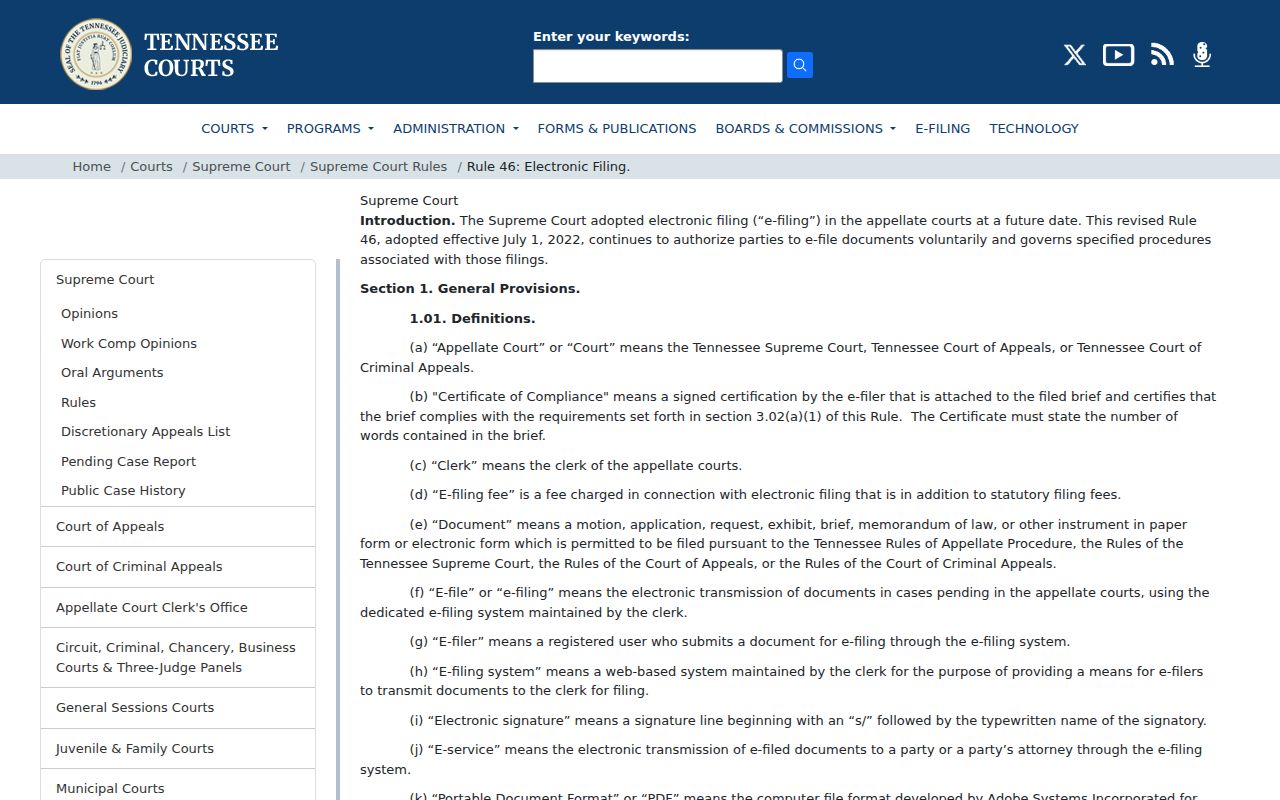
The rule clarifies where filing systems stop and the public civil docket search begins. Rule 46A covers electronic service in courts operating under local rules.
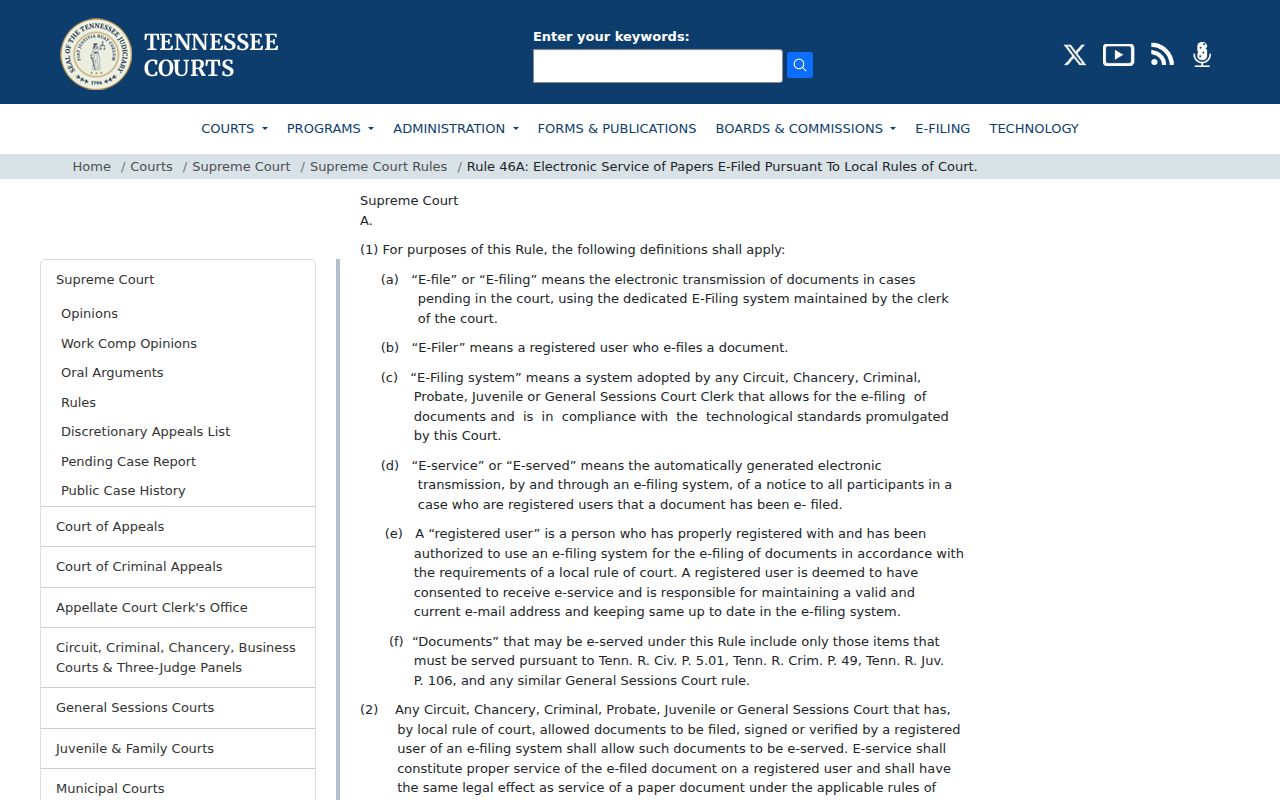
Electronic service is just delivery between registered users. It never proves a document is open to every public searcher of the docket.
Civil Docket Access Rules
Civil court records in Haywood County start from a presumption of openness. A statute, rule, or court order can still limit access. So a public docket may sit alongside sealed attachments. It may also hold redacted account numbers, protected names of minors, medical records, or private financial data. Redaction strips the protected details. It leaves an accessible version of the court record when the law allows it.
Access rules:
Tennessee Supreme Court Rule 34 opens public court records unless an express exception applies.
Tennessee Rule of Civil Procedure 1A requires a serious and substantial interest, and no less restrictive means, before civil records are sealed.
Tennessee Public Records Act guidance explains inspection and copy requests.
The official Rule 34 source shows the statewide access framework.
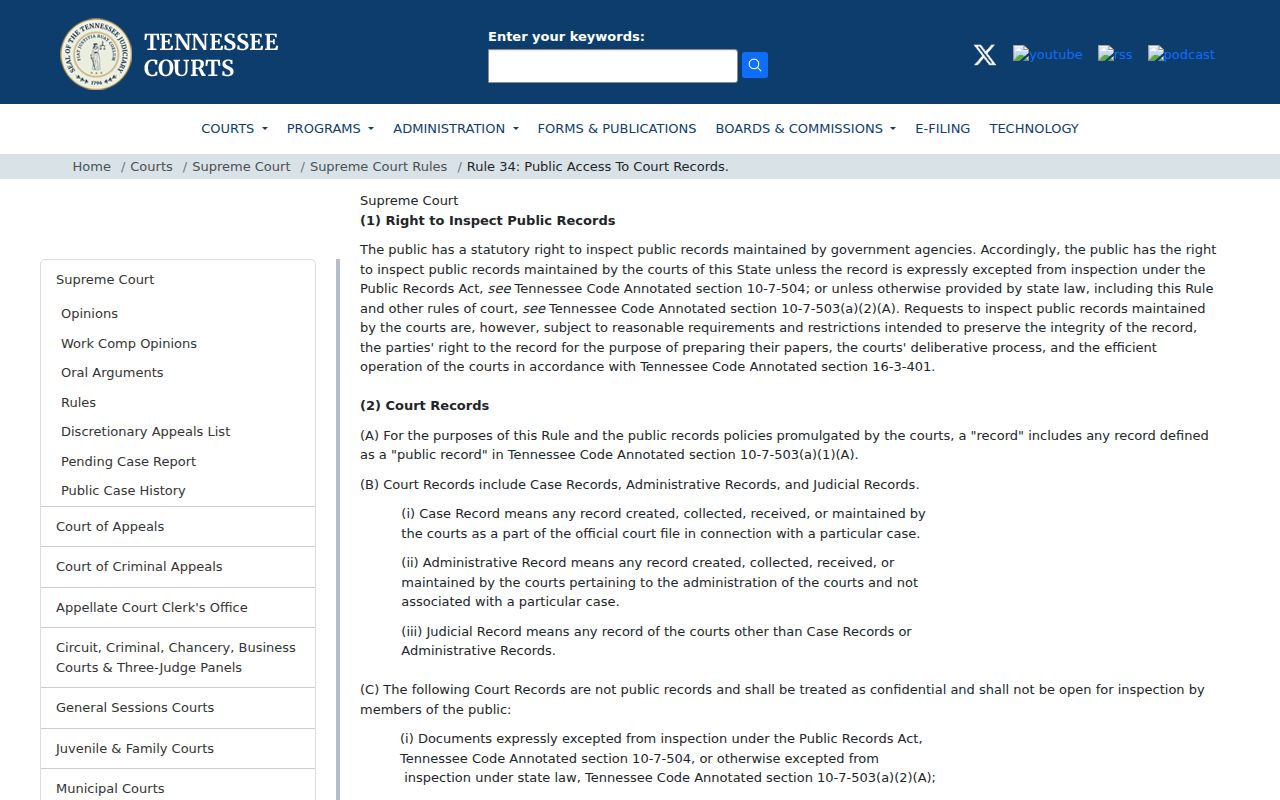
Haywood trial courts also keep written office policies that shape how a request actually moves. Is a file partly restricted? Then ask whether the public docket, a redacted copy, or a less restricted order can be released. Name the exact pleading, exhibit, minutes entry, order, or judgment you need. Clerks handle existing court records. They do not build new summaries on request.
Requesting Haywood Civil Documents
A clear request names the court, case number, party names, date range, document title, and the format you want. Say whether you seek inspection, an electronic copy, a paper copy, or certification. State guidance says an office need not create a new record or compilation. A copy request may need to be in writing. Inspection is generally free unless another law applies. The custodian may hand over the records. Access may be denied in writing. Or the custodian may explain within the state response path why more time is needed.
The accessible court pages post no complete civil-copy schedule. Before ordering copies, ask the office for a current Haywood County fee estimate and delivery method. The Circuit Clerk holds Circuit and General Sessions files. The Clerk & Master handles Chancery and post-1982 probate. The County Clerk covers its stated legacy ranges. A precise item sent to the right custodian beats a broad demand for everything tied to a name.
For formal use, tell the clerk what certification the receiving body requires. A portal printout and a certified copy serve different purposes. Keep the clerk's response, your receipt, and any written explanation of redaction or restricted access. Staff may also need the case type and filing year to pull older paper material from the docket.